

Chapter 1 

Part 1 – Understanding Medical Weight Loss

Understanding Obesity: Why Losing Weight Is About More Than Willpower

Body weight is regulated by biology, not just willpower. Here’s the science behind why diets often fail — and what makes medical weight loss different.

7+
biological factors explained
FDA

regulated medications

7

chapters in this guide

medical weight loss

Physician-Reviewed

Medical Weight Loss Guide

KEY TAKEAWAY

Obesity is now widely recognized by the medical community as a chronic, complex metabolic disease influenced by genetics, hormones, the brain, the digestive system, sleep, stress, medications, environment, and lifestyle. Understanding this biology is the foundation of successful, long-term medical weight loss.

A new way to think about weight loss

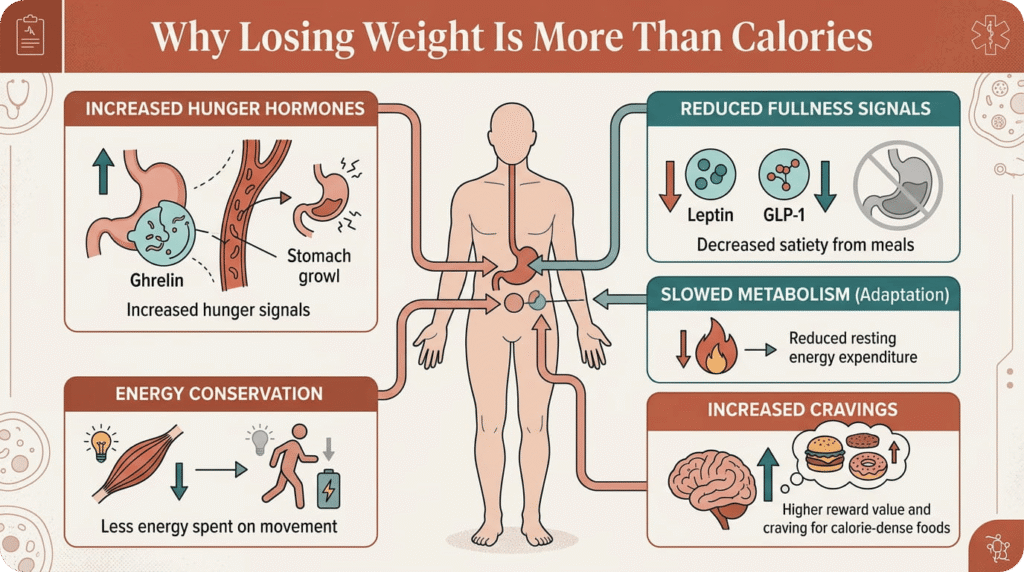
If you’ve struggled to lose weight — or lost weight only to regain it — you are not alone. For decades, obesity was often viewed as a personal failure or a lack of discipline. Today, scientific research tells a very different story: body weight is regulated by biology, not just willpower. Your body has sophisticated systems that influence hunger, fullness, energy expenditure, blood sugar, fat storage, hormone production, and metabolism. When you lose weight, your body does not simply accept the change — it may respond by increasing hunger, reducing fullness signals, and conserving energy.
medical weight loss

Why diets often fail

Many people believe weight loss follows a simple equation: eat less, move more. While calorie balance plays a role, human metabolism is far more complex. When you reduce calories, your body may respond by increasing hunger hormones, reducing fullness signals, slowing metabolism, conserving energy, and increasing cravings for calorie-dense foods. From an evolutionary perspective, these responses helped humans survive periods of famine — today, they can make sustained weight loss difficult, explaining the frustrating cycle: lose weight, feel hungrier, slow metabolism, regain weight, repeat. Modern medical weight loss aims to work with your biology rather than against it.

Clinical Pearl
Your body does not know you are trying to lose weight for your health. From a biological standpoint, it may interpret weight loss as a potential threat to survival. Many modern obesity medications are designed to help regulate the biological signals that influence hunger, fullness, and metabolism.

Obesity is a chronic disease

Many leading medical organizations recognize obesity as a chronic disease requiring long-term management — like hypertension or type 2 diabetes. It develops through a combination of genetics, hormones, environment, lifestyle, sleep, stress, medical conditions, and medications. No single factor explains obesity, and no single treatment works for everyone; successful treatment usually combines multiple strategies tailored to the individual.

The biology behind hunger

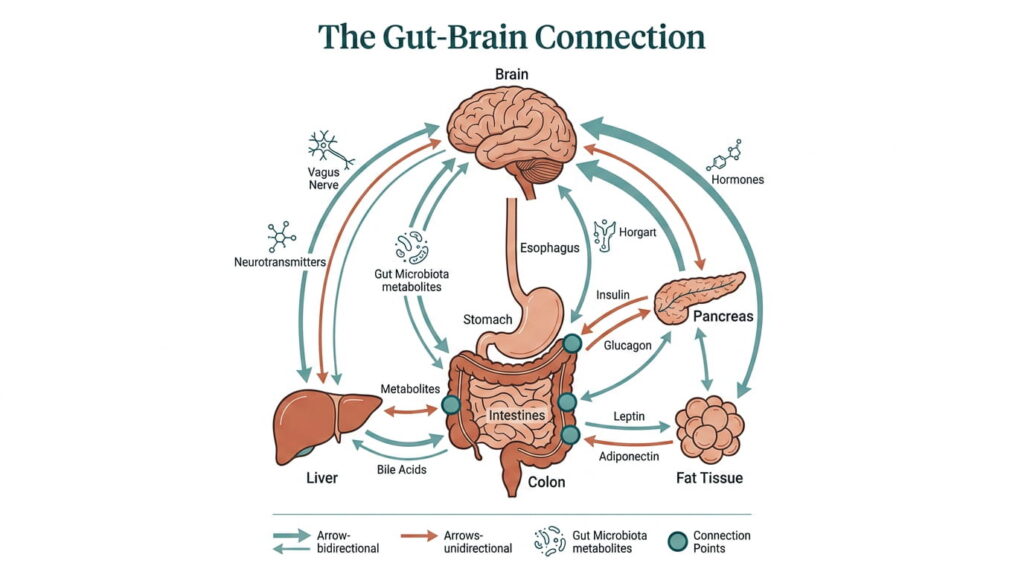
Most people think hunger begins in the stomach. In reality, hunger is coordinated by a complex communication network between your brain, digestive system, pancreas, liver, fat tissue, and hormones circulating throughout your body — constantly answering questions like: have you eaten recently, how much energy is stored, and should you burn calories or conserve them? Medical weight-loss medications work by influencing many of these same pathways.
Understanding food noise

Food noise refers to the persistent thoughts about food that many people experience throughout the day — constant snacking thoughts, thinking about the next meal shortly after eating, difficulty feeling satisfied, frequent cravings, and feeling preoccupied with food. Although not a formal medical diagnosis, many patients use the term to describe a common experience that may improve with treatment. For some people taking GLP-1 medications, one of the earliest noticeable changes is a reduction in these persistent thoughts.

Obesity is about more than the scale

Weight is only one measurement of health. Many providers also consider waist circumference, blood pressure, blood sugar, cholesterol, liver health, sleep quality, energy levels, mobility, quality of life, and risk of chronic disease — why modern medical weight-loss programs often focus on improving overall metabolic health, not just a number on the scale.

Why medical weight loss is different

Traditional diets often rely on motivation alone. Medical weight loss combines physician oversight, nutrition guidance, physical activity, behavioral support, prescription medications when appropriate, and long-term follow-up — supporting healthier biological regulation rather than expecting patients to fight against their biology.

Clinical Pearl

Your body does not know you are trying to lose weight for your health. From a biological standpoint, it may interpret weight loss as a potential threat to survival. Many modern obesity medications are designed to help regulate the biological signals that influence hunger, fullness, and metabolism.
“The biggest surprise wasn’t losing weight. It was the silence. I hadn’t realized how much of my day was spent thinking about food until those thoughts became quieter.”
— He & She MD patient. Individual experiences vary.

Myth vs. Fact

Myth: “If I had more willpower, I could lose weight without medical help.”
Fact: Weight regulation is influenced by many biological systems beyond conscious control, including hormones, genetics, metabolism, appetite regulation, sleep, and environmental factors. For some people, physician-supervised medical treatment may be an appropriate part of a comprehensive weight-management plan.

Research Spotlight

Over the past two decades, advances in obesity research have significantly improved our understanding of how the brain, digestive system, and hormones regulate body weight. This growing body of evidence has helped shape the development of newer medications that target appetite-regulating pathways, offering additional treatment options for appropriate patients when combined with lifestyle interventions.

Frequently Asked Questions

Is obesity really a disease, or is it about willpower?

Leading medical organizations recognize obesity as a chronic disease influenced by genetics, hormones, environment, and lifestyle — not simply a lack of willpower.

When you lose weight, your body may respond by increasing hunger hormones and slowing metabolism — a biological response, not a lack of motivation.

It’s the persistent thoughts about food many people experience throughout the day — constant snacking thoughts, cravings, or difficulty feeling satisfied.

No. It combines physician oversight, nutrition guidance, physical activity, behavioral support, and prescription medications when appropriate.

Scientific References

  1. American Medical Association House of Delegates — Resolution 420 (A-13), Recognition of Obesity as a Disease (2013). Read the resolution
  2. National Institute of Diabetes and Digestive and Kidney Diseases (NIDDK) — Definition & Facts for Adult Overweight & Obesity. niddk.nih.gov
  3. Centers for Disease Control and Prevention — Adult Obesity Facts. cdc.gov/obesity/adult-obesity-facts
  4. Obesity Medicine Association — The Obesity Algorithm®, a clinical framework for assessing and managing obesity as a chronic disease. obesitymedicine.org/resources/obesity-algorithm

Ready to see if you qualify?

Takes two minutes. No obligation, no pressure.