

If you’ve ever tried to lose weight, chances are you’ve seen countless advertisements promising rapid results — lose 20 pounds in 30 days, burn fat while you sleep, detox your body, one simple trick. Unfortunately, most of these programs share one thing in common: they focus on temporary weight loss, not long-term health. Medical weight loss takes a different approach. Instead of asking “How can I lose weight quickly?” it asks “Why has this person gained weight, and how can we safely improve their long-term health?” That difference changes everything.
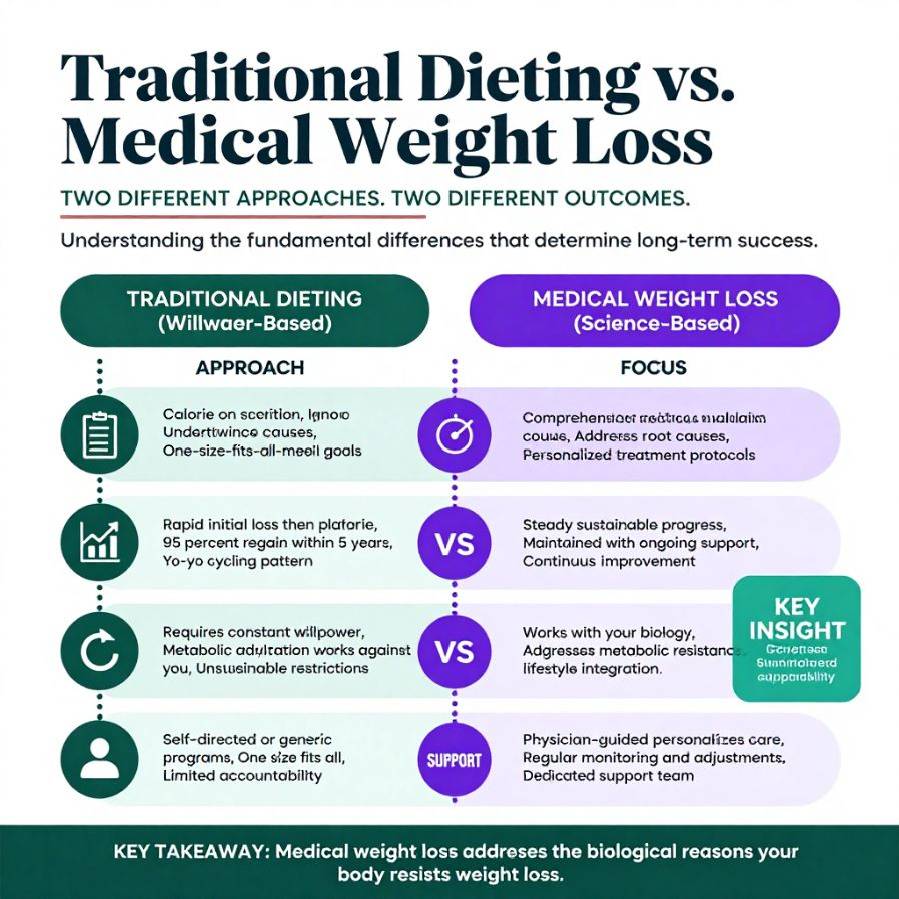
Medical weight loss is a personalized treatment program supervised by licensed healthcare professionals. Rather than relying on a one-size-fits-all diet, it considers the many factors that influence body weight, including medical history, current medications, family history, lifestyle, nutrition, physical activity, sleep, stress, hormonal health, metabolic conditions, and weight-loss goals. Following a comprehensive evaluation, your provider may recommend lifestyle changes alone, or lifestyle changes combined with prescription medication, depending on your individual needs. No two patients receive exactly the same plan because no two patients have the same medical history, health profile, or goals.
Although weight loss is an important objective for many patients, it is only one measure of success. A comprehensive medical weight-loss program may also focus on improving blood sugar control, blood pressure, cholesterol, metabolic health, energy levels, mobility, sleep quality, confidence, quality of life, and long-term disease prevention. The ultimate goal is to improve health — not simply reduce body weight.
Medical weight loss is not designed for everyone. Healthcare providers evaluate whether treatment is appropriate based on multiple factors, which may include body mass index (BMI), weight-related medical conditions, previous weight-loss attempts, current medications, overall health, and individual treatment goals. Providers may also consider factors beyond BMI, recognizing that metabolic health is more complex than a single number.

One of the biggest misconceptions about modern obesity medicine is that medication alone causes long-term success. In reality, medication is often just one component of a comprehensive care plan. Many physician-supervised programs also emphasize nutrition — building sustainable eating habits rather than following restrictive diets; physical activity — finding movement that fits your lifestyle; behavioral change — developing strategies that make healthy choices easier to maintain; and ongoing medical support — regular follow-up so your care team can monitor progress, adjust treatment, and answer questions as your journey evolves.
Weight management is rarely a one-time event. Like other chronic conditions, long-term success often depends on continued support. Patients frequently experience plateaus, changes in appetite, lifestyle changes, travel, holidays, stress, and new medical conditions. Having access to ongoing medical care allows treatment to evolve alongside your health.
Today’s medical weight-loss programs extend beyond the clinic. Digital tools can help patients stay connected to their care team, monitor progress, and access educational resources between appointments. The He & She MD app brings together medication management, prescription refills, secure provider messaging, weight tracking, Daily Dose educational content, coaching resources, and progress monitoring. Technology does not replace your clinician — it supports your care by making it easier to stay engaged and informed.
One of the strongest predictors of long-term success is understanding why you’re following a treatment plan. Patients who understand how medications work, what to expect, and how nutrition and activity support treatment are often better prepared to stay engaged throughout their journey. That’s one reason Daily Dose exists — a growing library of evidence-based educational resources, of which this guide is one example.
