

Chapter 4 

Part 2 – GLP-1 Science

How GLP-1 Medications Work Throughout the Body

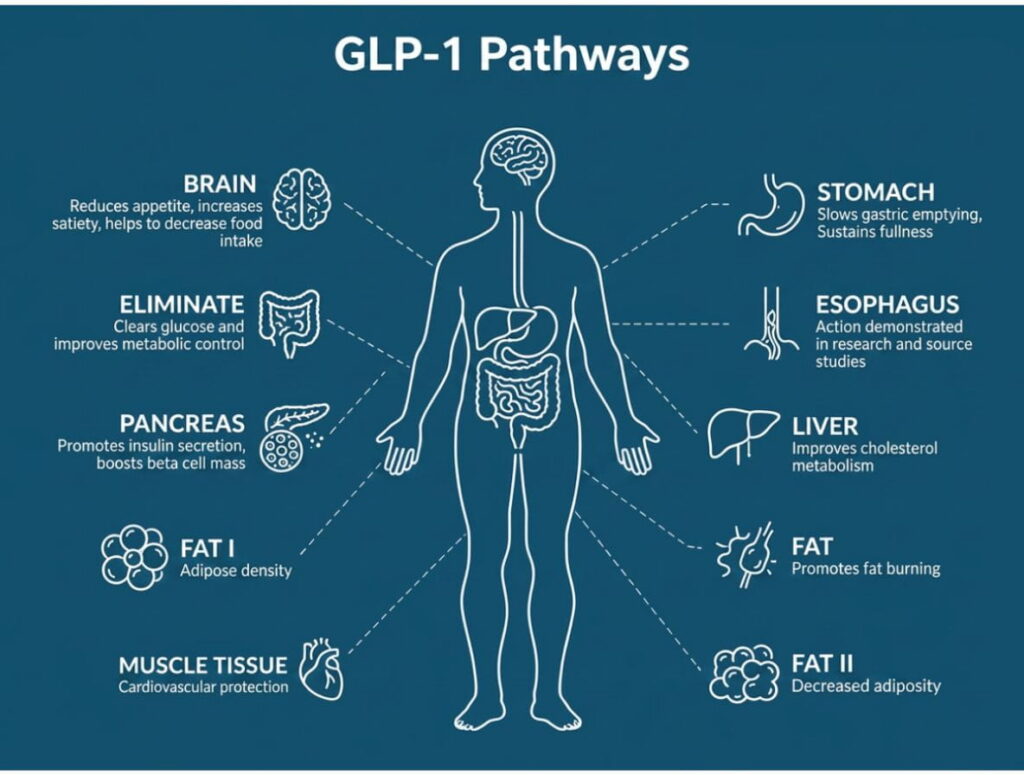
GLP-1 medications don’t work in just one place. They influence the brain, stomach, pancreas, liver, and muscle — the organ systems that naturally regulate hunger, fullness, blood sugar, digestion, and metabolism.

FDA

regulated medications

7

chapters in this guide

Prescription Weight Loss Medication

Physician-Reviewed

Medical Weight Loss Guide

KEY TAKEAWAY

GLP-1 medications don’t work in just one place. They influence multiple organ systems that naturally regulate hunger, fullness, blood sugar, digestion, and metabolism. Understanding how these systems work together helps explain why modern medical weight loss is about much more than simply eating less.

Your body functions as one connected system

One of the biggest misconceptions about weight-loss medications is that they simply “turn off” your appetite. The reality is far more sophisticated. When you eat a meal, your digestive system, pancreas, liver, brain, muscles, and fat tissue immediately begin communicating with one another — exchanging signals that answer questions like: have we eaten enough, should we store or burn energy, are blood glucose levels stable? Rather than forcing weight loss, GLP-1 medications work by supporting many of these naturally occurring communication pathways.
Prescription Weight Loss Medication

The brain: where appetite begins

Although we often associate hunger with an empty stomach, appetite is primarily regulated by the brain. A region called the hypothalamus continuously receives hormonal signals that help determine hunger, fullness, food cravings, energy balance, and long-term body weight regulation. GLP-1 receptor agonists interact with these pathways, helping many patients feel satisfied after eating smaller meals — the goal is not to eliminate the enjoyment of food.

The stomach: slowing gastric emptying

After food enters the stomach, it normally moves gradually into the small intestine — a process called gastric emptying. GLP-1 activity slows this process, which for many patients means feeling full sooner, staying full longer, smaller portions, and less snacking between meals. This is one reason providers often encourage eating slowly and stopping once comfortably full.

The pancreas: supporting healthy blood sugar regulation

The pancreas releases insulin after eating to help move glucose from the bloodstream into cells. GLP-1 helps support this natural insulin response when blood glucose rises, and reduces unnecessary glucagon release during meals. Although many people first became familiar with GLP-1 medications through diabetes treatment, these same pathways also contribute to appetite regulation and weight management.

Prescription Weight Loss Medication

The liver: your metabolic control center

The liver helps regulate blood glucose, releasing stored glucose between meals. During meals, hormonal signals including GLP-1 activity help coordinate this process. The liver also plays a role in fat metabolism, cholesterol production, energy storage, and protein metabolism — because obesity and metabolic disease often affect liver health, improving overall metabolic function may provide benefits beyond changes on the scale.

Research Spotlight
Excess body weight is associated with an increased risk of metabolic dysfunction-associated steatotic liver disease (MASLD), formerly known as nonalcoholic fatty liver disease (NAFLD). Weight reduction through lifestyle changes and, when appropriate, medical therapy may improve liver-related health markers in many patients.

Muscle: preserving lean body mass

When most people think about weight loss, they focus on losing fat. Healthcare providers think about preserving muscle too — important for strength, balance, physical function, healthy aging, and metabolism. Without adequate protein intake and resistance exercise, people losing weight may lose lean body mass along with fat. Medication should support these healthy habits, not replace them.

Fat tissue: more than energy storage

Body fat is often misunderstood. Fat tissue is not simply stored energy — it also functions as an active endocrine organ that produces hormones involved in appetite, inflammation, metabolism, and energy balance. As body composition changes, these hormonal signals change as well.

Why weight loss improves more than appearance

Patients often begin treatment wanting to lose weight, but many discover improvements they weren’t expecting — more energy, easier movement, improved confidence, better sleep, reduced joint discomfort, and improved quality of life. Individual experiences vary, and weight loss should not be viewed as a guarantee of any specific health outcome.

The He & She MD difference

Understanding how your body works is only the beginning. Successful long-term weight management also depends on tracking progress, building sustainable habits, and maintaining communication with your healthcare team. The He & She MD app supports reviewing your treatment plan, requesting refills, messaging your care team, tracking weight, and accessing Daily Dose content.

Clinical Pearl

Many patients describe this experience as having “more control” over eating rather than “losing interest” in food altogether. Healthy eating should still be enjoyable.
I used to finish dinner and immediately start looking for dessert. Now I actually recognize when I’m full. That feeling was something I’d almost forgotten.
— He & She MD patient. Individual experiences vary.

Myth vs. Fact

Myth: “Weight-loss medications only affect appetite.”
Fact: GLP-1 medications interact with multiple organ systems involved in appetite regulation, digestion, blood sugar regulation, and metabolism.

Myth: “If I’m taking medication, I don’t need to exercise.”
Fact: Physical activity remains essential. Resistance training, cardiovascular exercise, and adequate protein intake help preserve muscle and support healthy weight management alongside treatment.

Research Spotlight

Excess body weight is associated with an increased risk of metabolic dysfunction-associated steatotic liver disease (MASLD), formerly known as nonalcoholic fatty liver disease (NAFLD). Weight reduction through lifestyle changes and, when appropriate, medical therapy may improve liver-related health markers in many patients.

Frequently Asked Questions

Do GLP-1 medications work in just one place in the body?

No. They influence the brain, stomach, pancreas, liver, and muscle — organ systems that together regulate appetite and metabolism.

Slowed gastric emptying helps many patients feel full sooner and stay full longer, which can reduce snacking and portion sizes.

Muscle supports strength, balance, physical function, and metabolism — losing lean mass along with fat can undermine long-term health, so protein intake and resistance training are emphasized.

No. Fat tissue also functions as an active endocrine organ producing hormones involved in appetite, inflammation, and metabolism.

Scientific References

  1. National Institute of Diabetes and Digestive and Kidney Diseases (NIDDK) — Definition & Facts for Adult Overweight & Obesity. Read source

Ready to see if you qualify?

Takes two minutes. No obligation, no pressure.