

Before GLP-1 medications became widely used, many patients had limited options — traditional diets often produced temporary results, and many struggled with regain despite sincere effort. Rather than focusing only on calorie restriction, Semaglutide targets one of the body’s natural appetite-regulating pathways: GLP-1. As learned in Part 1, GLP-1 helps signal fullness, slows gastric emptying, supports insulin response, and helps regulate blood sugar — Semaglutide mimics this natural hormone with a longer-lasting effect.
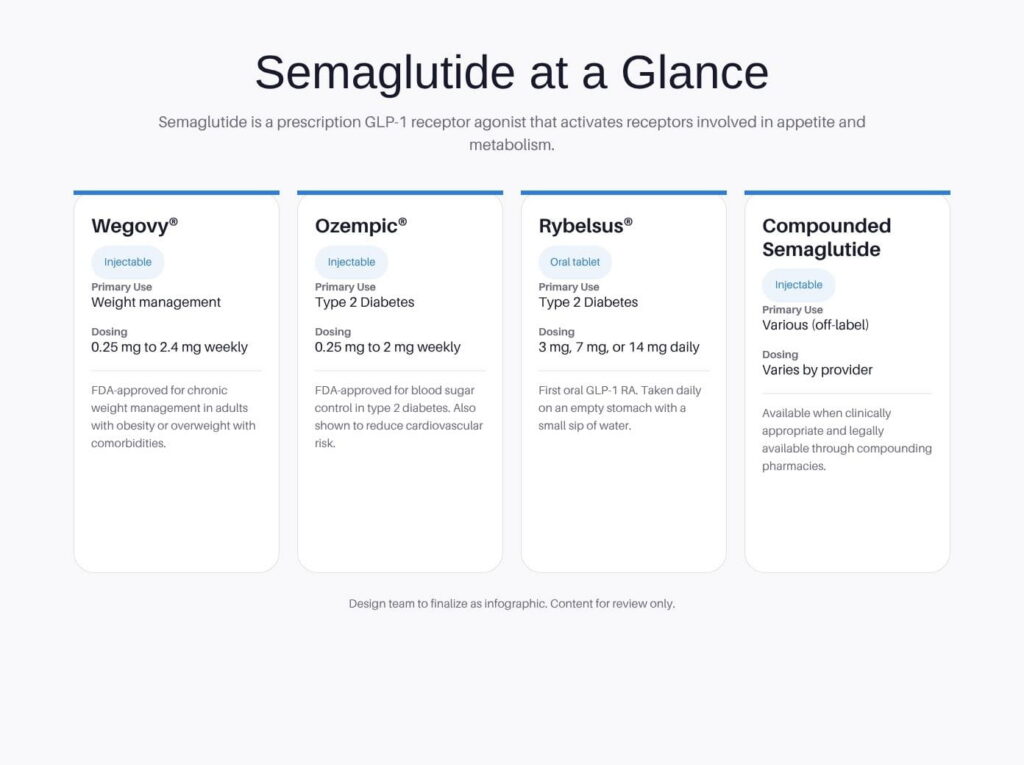
Semaglutide is a prescription GLP-1 receptor agonist. It activates GLP-1 receptors in areas involved in appetite and metabolism, including the brain, stomach, pancreas, and digestive system. It may be prescribed in different forms depending on the patient’s needs and provider recommendation, including Wegovy®, Ozempic®, Rybelsus®, and compounded Semaglutide when clinically appropriate and legally available.
In the brain: may reduce hunger and increase fullness, and some patients notice reduced food noise. In the stomach: slows gastric emptying, helping patients feel full sooner and longer. In the pancreas: supports insulin release when blood sugar is elevated. In the liver: may help reduce excess glucose production. Together, these effects can support improved metabolic health.
| Medication | Form | Approved Use |
|---|---|---|
| Wegovy® | Injectable, once weekly | Chronic weight management |
| Ozempic® | Injectable, once weekly | Type 2 diabetes management |
| Rybelsus® | Oral tablet | Type 2 diabetes management |
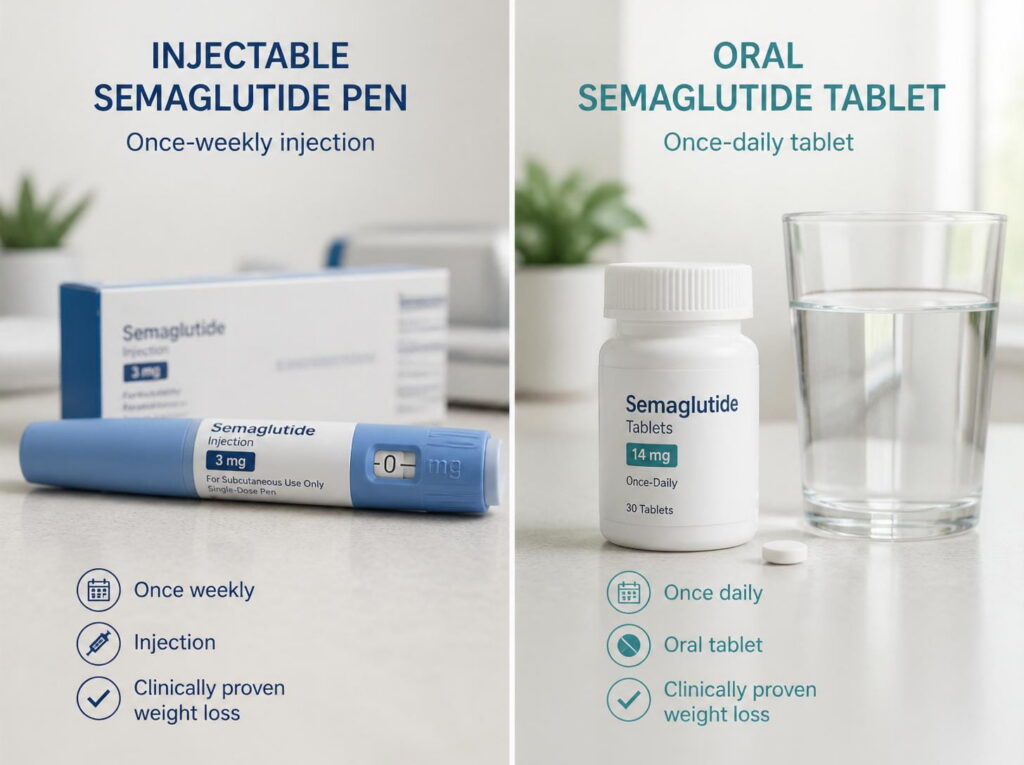
Injectable Semaglutide is typically administered under the skin once weekly, with the dose increased gradually over time (“dose titration”) to help the body adjust. Oral Semaglutide offers a needle-free option but requires specific instructions — taken on an empty stomach, with a small amount of water, before eating or other medications, with a waiting period before food. Because absorption is sensitive, consistency matters.
Compounded medications are prepared by licensed compounding pharmacies under specific circumstances and are not the same as FDA-approved branded medications. They may be considered when clinically appropriate and legally available, but should only be used under medical supervision, through appropriately licensed pharmacies, and never from unverified online sources.
Results vary. Some patients notice appetite changes within the first few weeks; weight loss typically occurs gradually over months. Patients may notice reduced hunger, smaller portions, less snacking, improved confidence, and better blood sugar markers. The goal is not rapid weight loss at any cost — it is safe, sustainable progress.
The most common side effects are gastrointestinal: nausea, vomiting, diarrhea, constipation, abdominal discomfort, bloating, decreased appetite, and indigestion. These are often more noticeable when starting treatment or increasing dose and may improve over time. Patients should contact their provider for severe or persistent symptoms, including severe abdominal pain, persistent vomiting, or signs of pancreatitis or gallbladder problems.
Providers consider factors such as personal or family history of certain endocrine tumors, history of pancreatitis, gallbladder disease, severe GI conditions, pregnancy or plans for pregnancy, current medications, and kidney function. Patients should share their full medical history before starting treatment.
Semaglutide can be powerful, but it is not a substitute for nutrition, movement, sleep, and long-term behavior change. Patients are often encouraged to focus on protein, strength training, hydration, fiber, sleep, and consistency.