

In Chapter 3, you learned that GLP-1 and GIP are naturally occurring hormones released after eating that both influence metabolism, blood sugar regulation, and appetite. Scientists wondered whether activating both pathways simultaneously could produce greater metabolic effects than GLP-1 alone — that research led to Tirzepatide, which builds upon GLP-1 therapy by engaging a second biological pathway involved in energy regulation. For appropriate patients, this dual-agonist approach may provide an additional treatment option that healthcare providers can consider based on individual medical history, treatment goals, and clinical judgment.
Tirzepatide is a prescription medication known as a dual GIP/GLP-1 receptor agonist. Like Semaglutide, it is administered as a once-weekly injection. Unlike Semaglutide, Tirzepatide activates two hormone pathways: GLP-1, which supports fullness, appetite regulation, gastric emptying, and blood sugar regulation; and GIP, which supports insulin response and plays an important role in metabolic regulation. Together, these pathways work in concert with the body’s existing physiology rather than creating a new biological system.

Although both medications belong to the incretin family, there are important differences. Semaglutide activates the GLP-1 receptor; Tirzepatide activates both GLP-1 and GIP receptors. This additional mechanism reflects decades of research into how multiple hormone pathways interact to regulate appetite, metabolism, and energy balance. For some patients this may translate into different treatment experiences, but medication selection should always be individualized.
Tirzepatide is available in branded formulations approved for specific indications. Patients may also hear about compounded Tirzepatide under limited circumstances where compounding is legally permitted and clinically appropriate — healthcare providers can explain availability, regulatory status, and appropriateness for an individual patient.
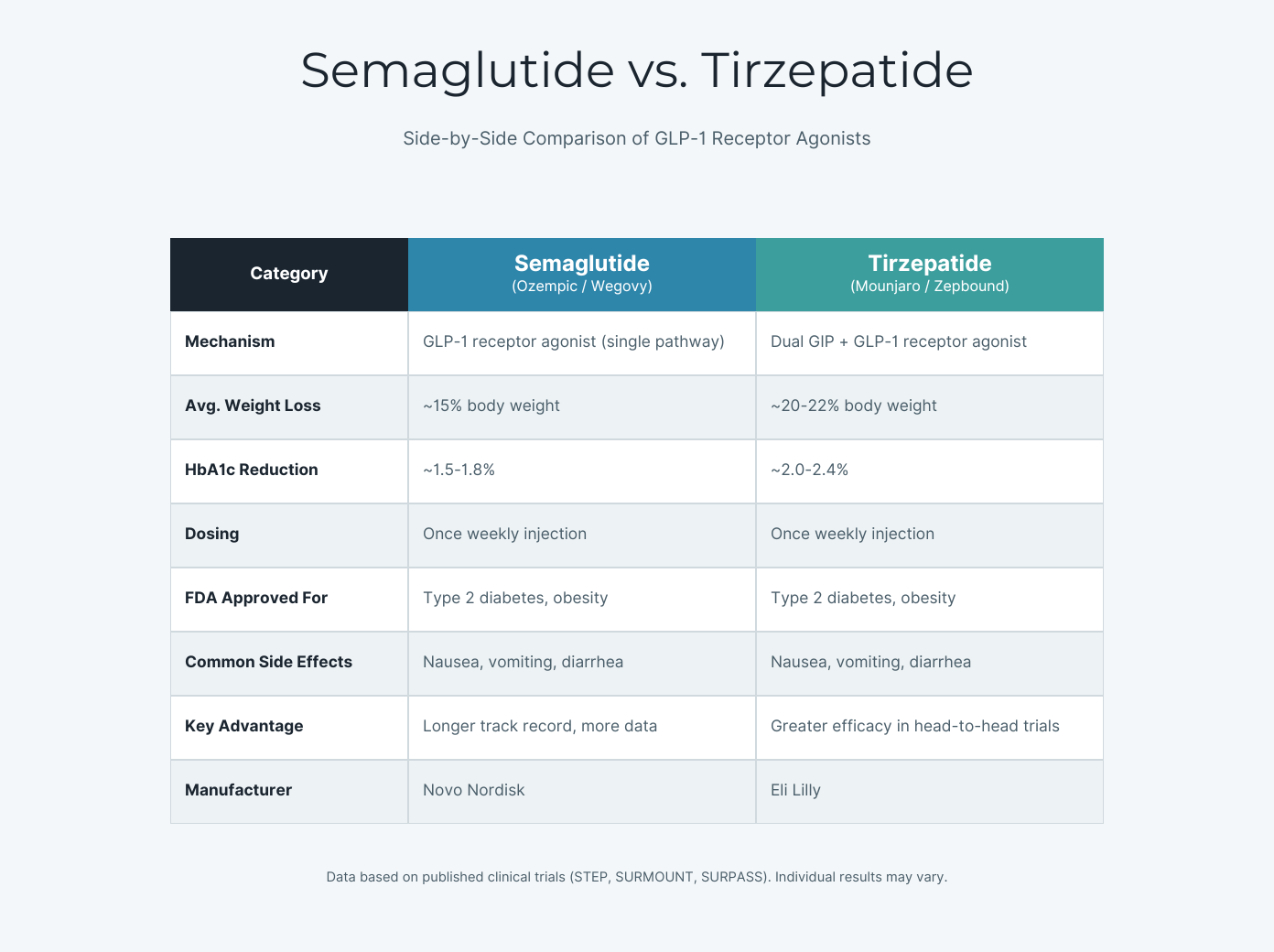
Like all obesity medications, results vary. Many patients experience reduced appetite, earlier fullness, decreased food noise, progressive weight loss over time, and improved metabolic markers in appropriate patients. Weight-loss medications should always be viewed as one component of a comprehensive treatment program that also includes nutrition, physical activity, behavioral support, and ongoing medical follow-up.
